Table of contents
Wanted criminals tracked across borders, or political opponents cornered abroad ? Interpol’s Red Notices sit at that uneasy intersection, and recent cases have sharpened the debate over how a global policing tool can be pulled into diplomatic bargaining. Although a Red Notice is not an arrest warrant, it can trigger detentions, travel bans, bank compliance alarms and reputational damage within minutes, raising a pressing question for governments, courts and travellers alike: how do you separate legitimate cross-border justice from pressure politics in an age of sanctions, hybrid conflicts and tightened border controls ?
Red Notices are not warrants, but they bite
Call it a “wanted” poster with consequences. Interpol itself is explicit: a Red Notice is a request to law-enforcement worldwide to locate and provisionally arrest someone pending extradition, surrender or similar legal action, it is not an international arrest warrant. Yet in practice, many police forces treat it as a strong signal, and border systems often react automatically, which is why the notice can reshape a person’s life long before a judge reviews any file.
The scale is not marginal. Interpol’s public statistics show thousands of Red Notices in circulation at any time, and member countries can upload requests around the clock through Interpol’s I-24/7 network. That operational reality matters because the notice travels faster than the safeguards meant to control it, and once it hits border databases, airlines, banks and compliance teams may respond conservatively, particularly when the person’s name resembles someone on sanctions lists or when the underlying case involves financial crime allegations. The result is a “shadow penalty” effect: cancelled flights, delayed visas, frozen accounts and employers backing away, even if extradition never happens.
Lawyers who work on cross-border cases describe the same pattern: the first harm is often practical, not legal. A provisional arrest at an airport can lead to days in custody while documents are verified, and some jurisdictions require courts to decide quickly whether to keep the person detained, release them with conditions or reject the request outright. That pressure, combined with language barriers and the lack of immediate access to the underlying evidence, is why Red Notices have become a focal point for debates about due process, proportionality and transparency.
Interpol has tightened its review mechanisms over the past decade, including stronger checks by its General Secretariat and a more prominent role for its independent body handling data-access requests and challenges, the Commission for the Control of Interpol’s Files. But the central tension remains: Interpol does not judge guilt, and it relies on information submitted by member states, which means the organisation’s neutrality is only as strong as its screening and the willingness of states to play by the rules.
Politics at the edges of police cooperation
Here is the uncomfortable part: criminal-justice tools can be tempting in geopolitical disputes. Interpol’s Constitution prohibits the organisation from undertaking any intervention or activities of a political, military, religious or racial character, a safeguard often referred to as “Article 3”. Still, controversy persists because a case that appears criminal on paper can be inseparable from politics in reality, especially when it involves dissidents, business figures caught in elite infighting, or allegations that follow a change of regime.
Human-rights groups and parliamentary inquiries in several democracies have repeatedly warned about “abusive” or “strategic” notices, and specific examples have fuelled headlines: exiled activists detained at borders, asylum seekers stopped despite claims of persecution, or businessmen targeted during commercial disputes that later show strong political overtones. Even when a notice is eventually removed, the intervening months can be punishing, and the reputational stain can linger, particularly in an era where online background checks are routine.
The diplomatic dimension is also visible in how extradition, sanctions and police cooperation can intersect. A country under international sanctions pressure may face restrictions on financial transactions, technology access and travel of key officials, yet it can still seek police cooperation through Interpol channels, and the target state then has to navigate competing obligations: international human-rights law, domestic extradition safeguards, refugee protections and, increasingly, compliance considerations shaped by sanctions regimes. This is where the “criminal” label becomes strategically valuable, because it can shift narratives, complicate asylum claims and deter international travel.
For individuals and companies, the grey zone is widening. A Red Notice may sit alongside parallel measures: asset freezes, export-control allegations, or accusations of sanctions evasion that are politically loaded in times of conflict. Managing that risk often requires expertise that blends criminal law, public international law and regulatory compliance, and many turn to specialists such as an international sanctions law firm when a notice overlaps with sanctions exposure, cross-border asset restrictions or heightened scrutiny from banks and border authorities.
What the data says, and what it hides
Numbers help, but they can also mislead. Interpol publishes high-level figures on notices and diffusions, and it maintains public “Red Notice” pages for some individuals, typically in cases where publication serves a policing purpose. Yet most Red Notices are not visible to the public, which is one reason researchers and journalists struggle to map patterns of use, abuse or regional disparities with precision.
What can be said with confidence is that the system is large, decentralised and unevenly implemented. Each of Interpol’s 196 member countries operates through a National Central Bureau, and domestic laws determine what happens when a Red Notice appears: automatic arrest in some jurisdictions, judicial review in others, and in a few places, a cautious approach that treats the notice as intelligence rather than a detention trigger. That variability creates a lottery effect for travellers, because the same notice may be ignored in one country and lead to immediate custody in another.
There is also a structural data gap around quality control. Interpol has described reforms designed to improve review of requests, including notices linked to refugees and asylum seekers, and it has reported efforts to reinforce legal screening and training. But without systematic public disclosure of rejection rates, the categories of alleged offences most often refused, or the time it takes to correct erroneous entries, outsiders have limited tools to evaluate whether safeguards are keeping pace with demand.
Another hidden layer is financial and reputational spillover. Banks and corporate compliance teams often rely on multiple sources: sanctions lists maintained by the United Nations, the European Union, the United States Office of Foreign Assets Control and other governments, plus commercial databases and adverse-media screening. A Red Notice can appear as a red flag in that ecosystem, even if it is not directly a sanctions designation. In practice, firms may de-risk first and ask questions later, because the penalties for sanctions breaches can be severe, and the cost of a false positive is often pushed onto the customer.
A travel stop can become a legal crisis
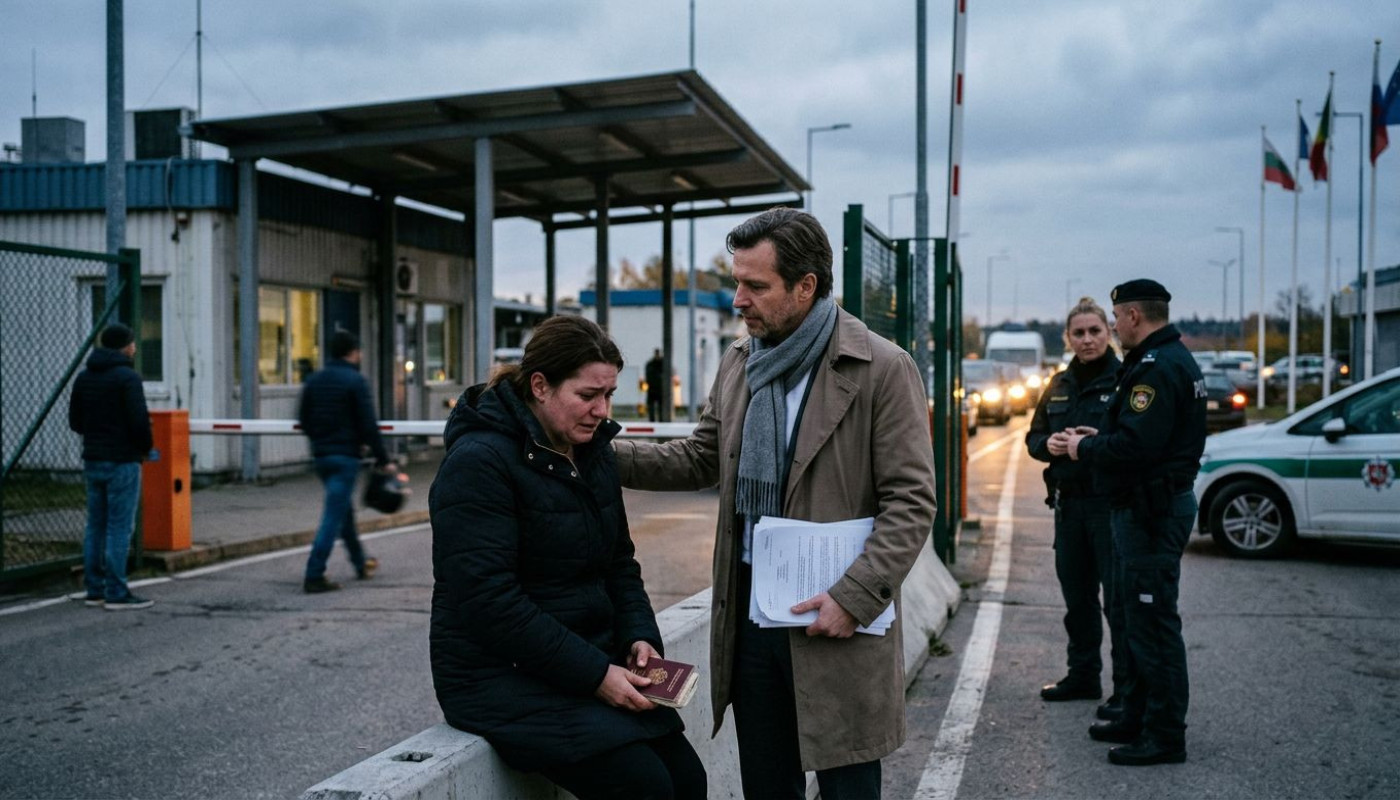
Everything feels theoretical, until the passport is scanned. Airports and land borders are where Red Notices turn into lived reality, and the stakes are high because decisions are made fast, sometimes with limited context, and in a setting where the individual is tired, disconnected and unsure of their rights.
The immediate priority is procedural. In many jurisdictions, a person detained on the basis of an Interpol hit needs to confirm what exactly triggered the stop: a Red Notice, a diffusion, a domestic warrant, or a name match error. That distinction matters because the legal pathways differ, and so do timelines for court review and access to evidence. Next comes the substance: is the underlying offence extraditable, is there dual criminality, are there treaty constraints, and are there bars linked to political motivation, risk of torture or unfair trial. Refugee status, pending asylum claims and humanitarian factors can be decisive, but only if they are documented and raised promptly.
Parallel issues can escalate quickly. If the allegation touches sanctions evasion, export controls, corruption or financial crime, authorities may seize devices, request banking data and alert financial-intelligence units, while private actors such as airlines or payment providers may suspend services. Families can be stranded and businesses can lose access to accounts or suppliers in days. This is why early legal coordination across jurisdictions is not a luxury, it is often the only way to prevent a border incident from snowballing into multi-country litigation.
Challenging a Red Notice is possible, but it is rarely quick. Requests to access or correct Interpol data typically go through the Commission for the Control of Interpol’s Files, and outcomes depend on the quality of the evidence, the nature of the offence and how convincingly the applicant can argue that the notice breaches Interpol rules, including Article 3 or data-quality standards. Meanwhile, the extradition process, where it begins, runs on its own track in domestic courts. That dual process, Interpol on one side and extradition on the other, is exactly where mistakes and delays can compound.
Planning, costs and the safest next step
For travellers and executives, the most practical move is to assess risk before boarding: check for pending disputes, unresolved warrants and compliance exposure, and avoid routing through jurisdictions known for automatic detention on Interpol alerts. If a stop occurs, insist on legal counsel immediately, request clarity on the legal basis for detention and prepare documentation on status, asylum claims and medical needs, because time is the enemy.
Budget realistically. Cross-border defence can involve emergency hearings, translations, travel and parallel compliance work with banks, and some countries offer legal aid only under strict conditions. Where sanctions issues are involved, specialised counsel can also map exposure and seek licences or exemptions, helping prevent a policing alert from turning into a financial lockout.
Similar